Categories
News

Four REMEDY Researchers Recognised Among the World’s Top 2% of Scientists

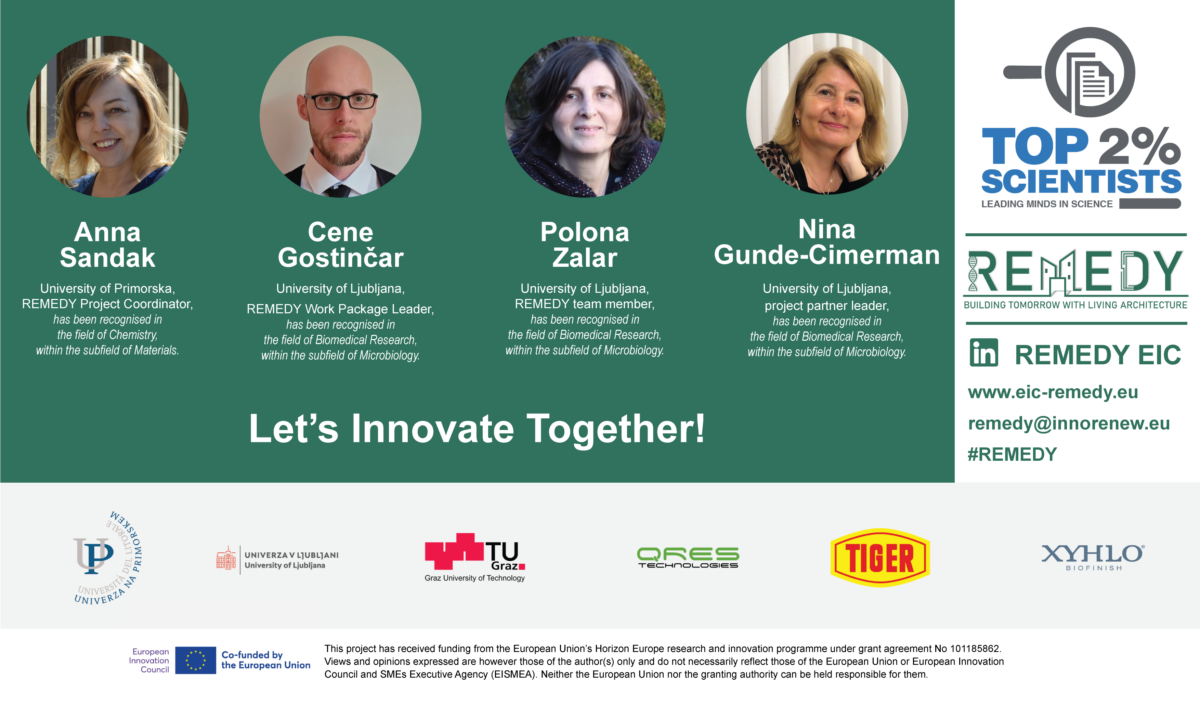
We are delighted to share that four researchers involved in the REMEDY project have been recognised among the top 2% of scientists worldwide in the list prepared by Elsevier and Stanford University. This recognition reflects the outstanding scientific contributions and expertise of researchers working within the REMEDY consortium and highlights the excellence of the institutions involved in the project.

The recognised researchers are:
Anna Sandak –  University of Primorska, the REMEDY Project Coordinator, has been recognised in the field of Chemistry, within the subfield of Materials.
Cene Gostinčar – University of Ljubljana, a REMEDY Work Package Leader, has been recognised in the field of Biomedical Research, within the subfield of Microbiology.
Polona Zalar – University of Ljubljana, has been recognised in the field of Biomedical Research, within the subfield of Microbiology.
Nina Gunde-Cimerman – University of Ljubljana, a project partner leader, has been recognised in the field of Biomedical Research, within the subfield of Microbiology.

The inclusion of four REMEDY researchers in this prestigious ranking is an important achievement for the project and demonstrates the high level of scientific expertise represented within the consortium.

Categories
News

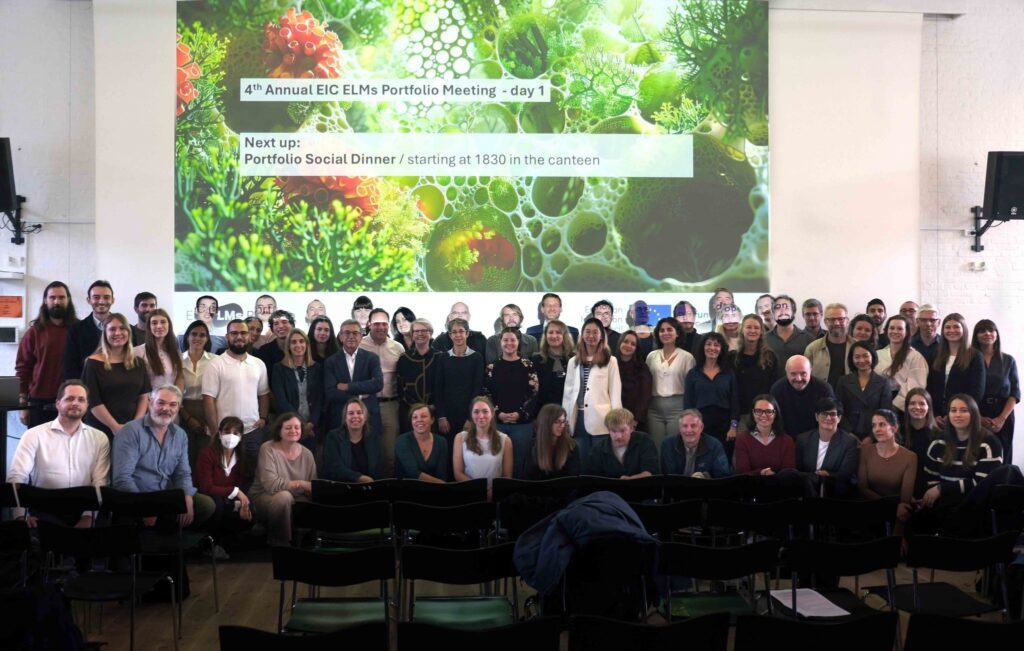
REMEDY partners at the 4th Annual EIC ELMs Portfolio Meeting

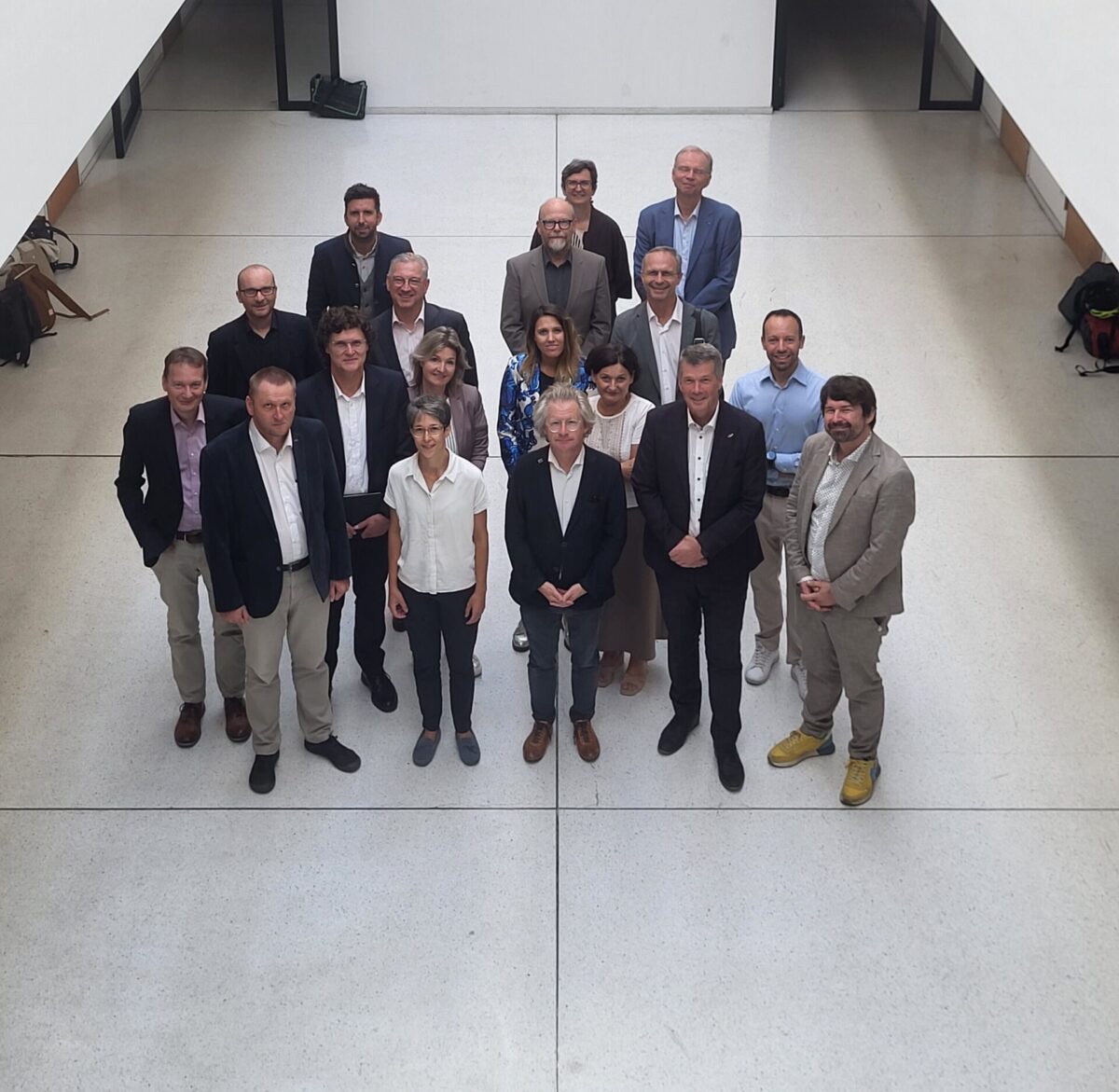
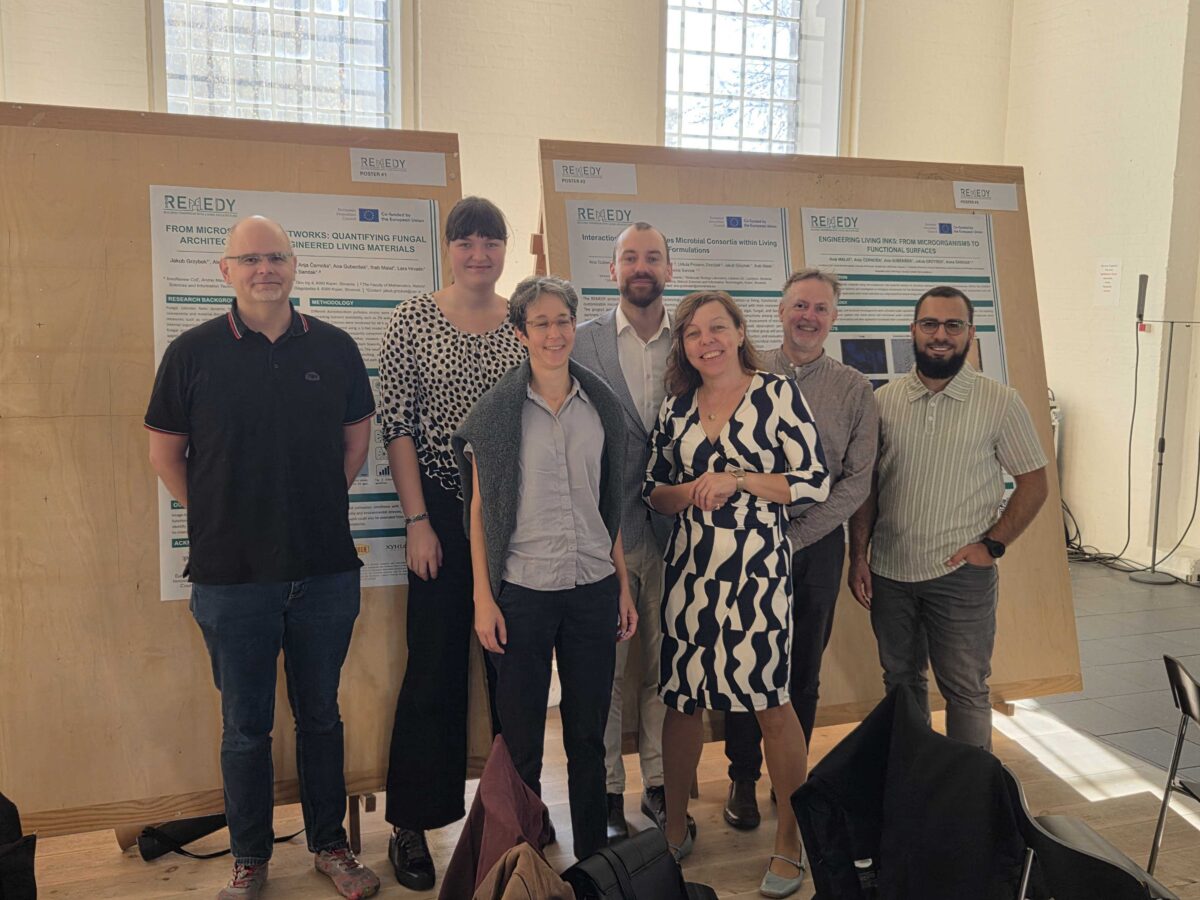
REMEDY partners participated in the 4th Annual EIC ELMs Portfolio Meeting, held 30 September – 1 October 2026, at the Royal Danish Academy in Copenhagen, Denmark.

The meeting brought together projects from the European Innovation Council (EIC) Engineered Living Materials (ELMs) portfolio to exchange knowledge and discuss the challenges of developing and scaling living materials from laboratory research toward real-world applications.

Dr. Anna Sandak presented the progress of the REMEDY project. Dr. Jakub Grzybek moderated the focus session, titled “ELMs: From Prototype to Production” together with Dr. Oliver Castell from Cardiff University. The session explored biological, technical, societal and industrial challenges related to scaling Engineered Living Materials.

Dr. Ihab Malat, Ana Gubenšek and Dr. Jakub Grzybek also presented their research during the networking and poster session. This meeting was a great opportunity to meet with other REMEDY partners – Carole Planchette from Technische Universität Graz, Holzinger Dieter from TIGER Coatings and Michael F. Sailer from Xyhlo.

Participation in the meeting provided an opportunity for researchers to present their ongoing research, exchange knowledge and strengthen collaboration with other ELM projects.

Categories
News

InnoRenew CoE, UP IAM at the Sustainable Waste Management in Materials Science conference

InnoRenew CoE, UP IAM researchers participated in the Sustainable Waste Management in Materials Science (SWMMS 2026) conference, held 21-23 September 2026 in Poznań, Poland.

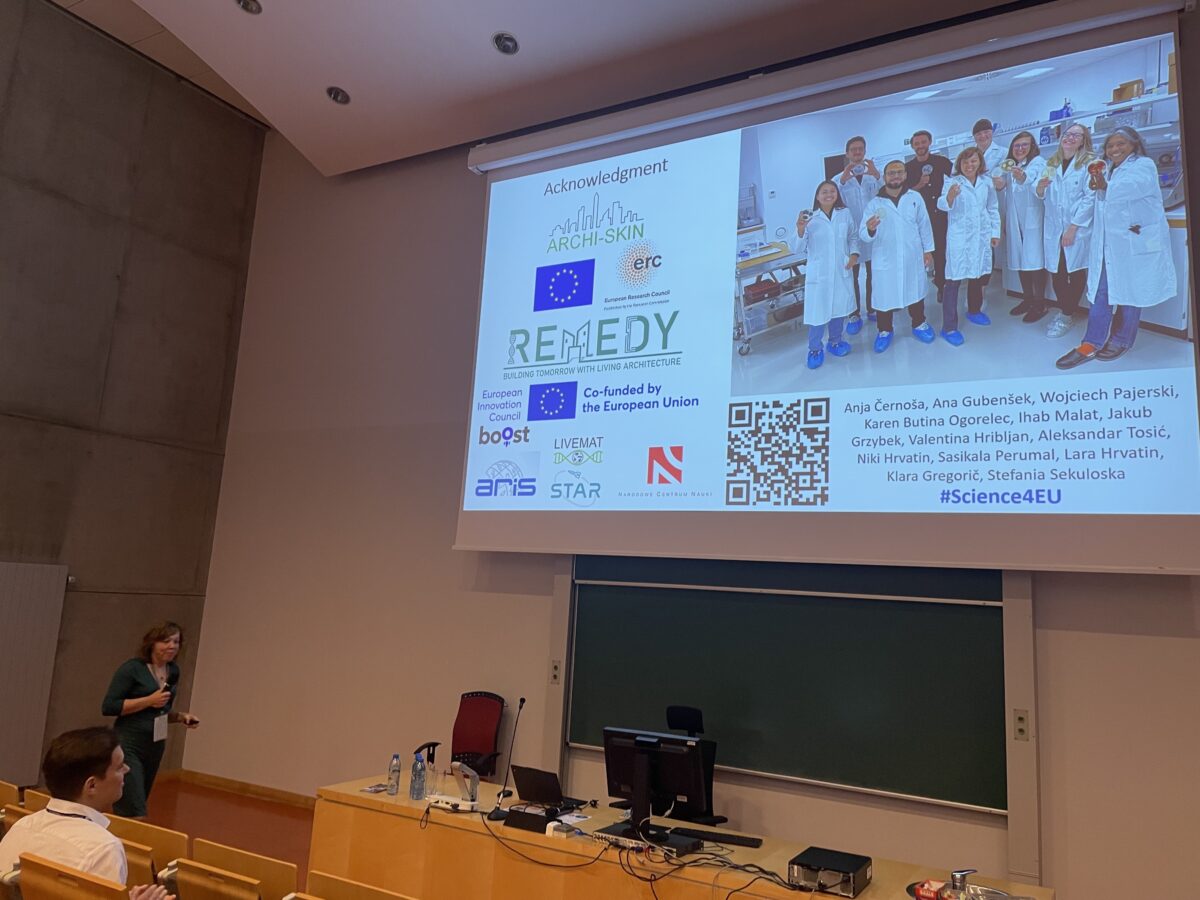
Dr. Anna Sandak, InnoRenew CoE, UP IAM Materials research group leader, delivered a plenary talk titled “Nature has no waste – rethinking materials design through living systems”, presenting research carried out within the ARCHI-SKIN, REMEDY, LIVEMAT and STAR projects.

Categories
News

REMEDY’s 3rd project meeting and General Assembly

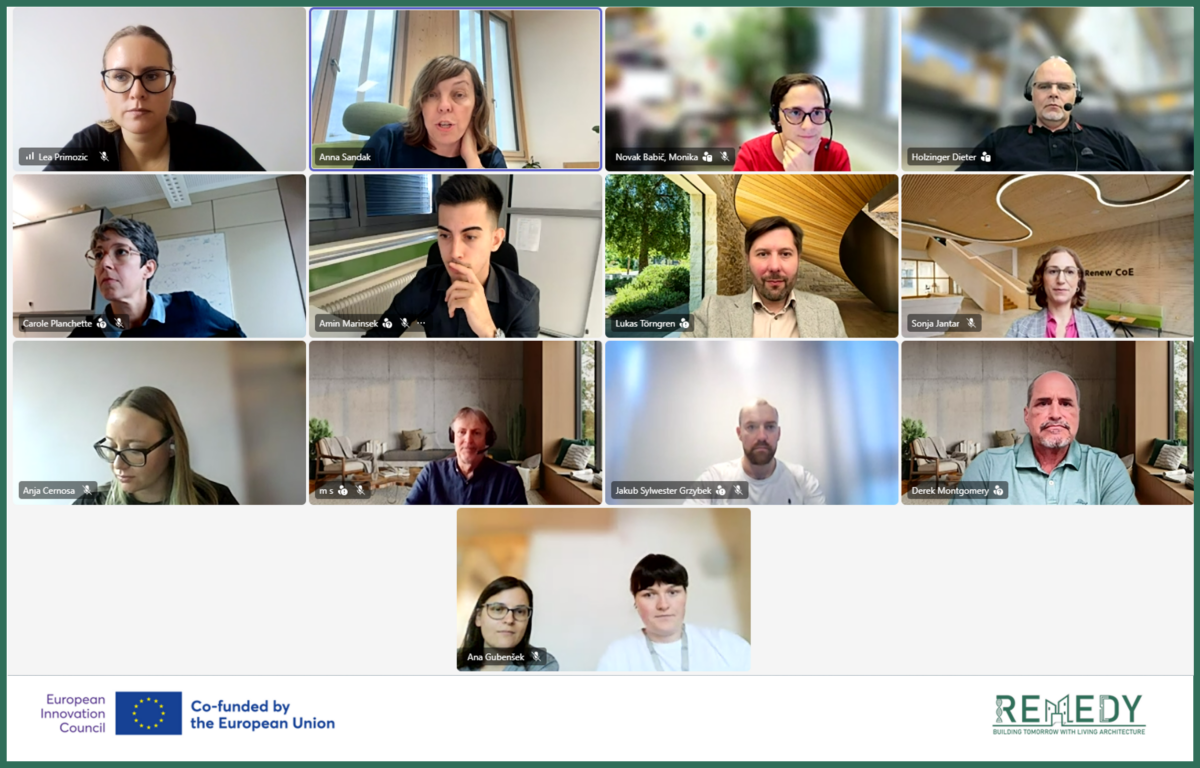
REMEDY project partners attended the 3rd progress meeting and the General Assembly, held online on 17 September 2026.

The meeting started with the welcoming words of Dr. Anna Sandak, REMEDY project coordinator, followed by partners presenting the work packages. The focus was on the progress within individual work package and plans for the next activities.

Next, was the General Assembly where partners reviewed the status of the six-month reporting period, intellectual property management strategy, selected booster activities, including go to market support, networking and coaching for public speaking, as well as the upcoming 4th ELMs annual meeting which will take place in Copenhagen and REMEDY representatives will be there.

The meeting was a nice opportunity for an in-depth review of the project’s progress and alignment on the next steps for its successful implementation.

Categories
News

REMEDY presented at the BPP 2026 conference

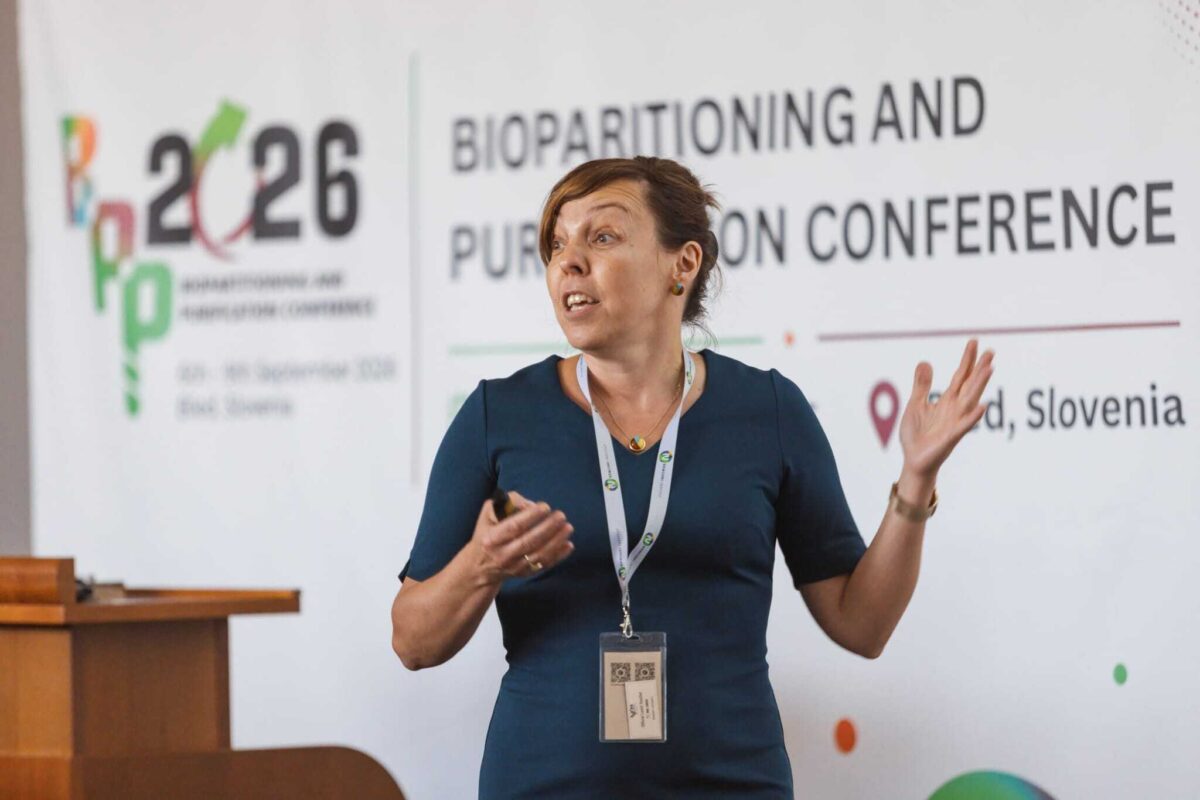
Dr. Anna Sandak, delivered a keynote lecture at the Biopartitioning and Purification Conference (BPP) 2026, entitled Engineered Living Materials as Integrated Bioprocessing Systems: From Living Cells to Resilient Cities.

In her talk, she explored engineered living materials (ELMs) from the perspective of integrated bioprocessing, focusing on fungal biofilms and microbial consortia that can be organised within materials to form living coatings, printable inks, and composite structures. These systems enable microorganisms to grow and produce their own structural matrices, creating functional materials directly during cultivation. By controlling growth conditions, formulation, and spatial organisation, living cells can be retained within the material, where they continue to perform functions such as sensing, regeneration, and bioremediation, reducing the need for extensive downstream processing while enabling materials that remain active over time.

The Biopartitioning and Purification Conference (BPP) has evolved from its original focus on aqueous two-phase partitioning to a broader platform covering diverse bioseparation techniques since BPP 2013 in Vancouver. Today, it brings together academia and industry to advance the separation of high-value bioproducts alongside topics such as biomass processing, waste valorisation, novel bioproduct development, technoeconomic analysis, life cycle assessment, and regulatory frameworks.

Categories
News

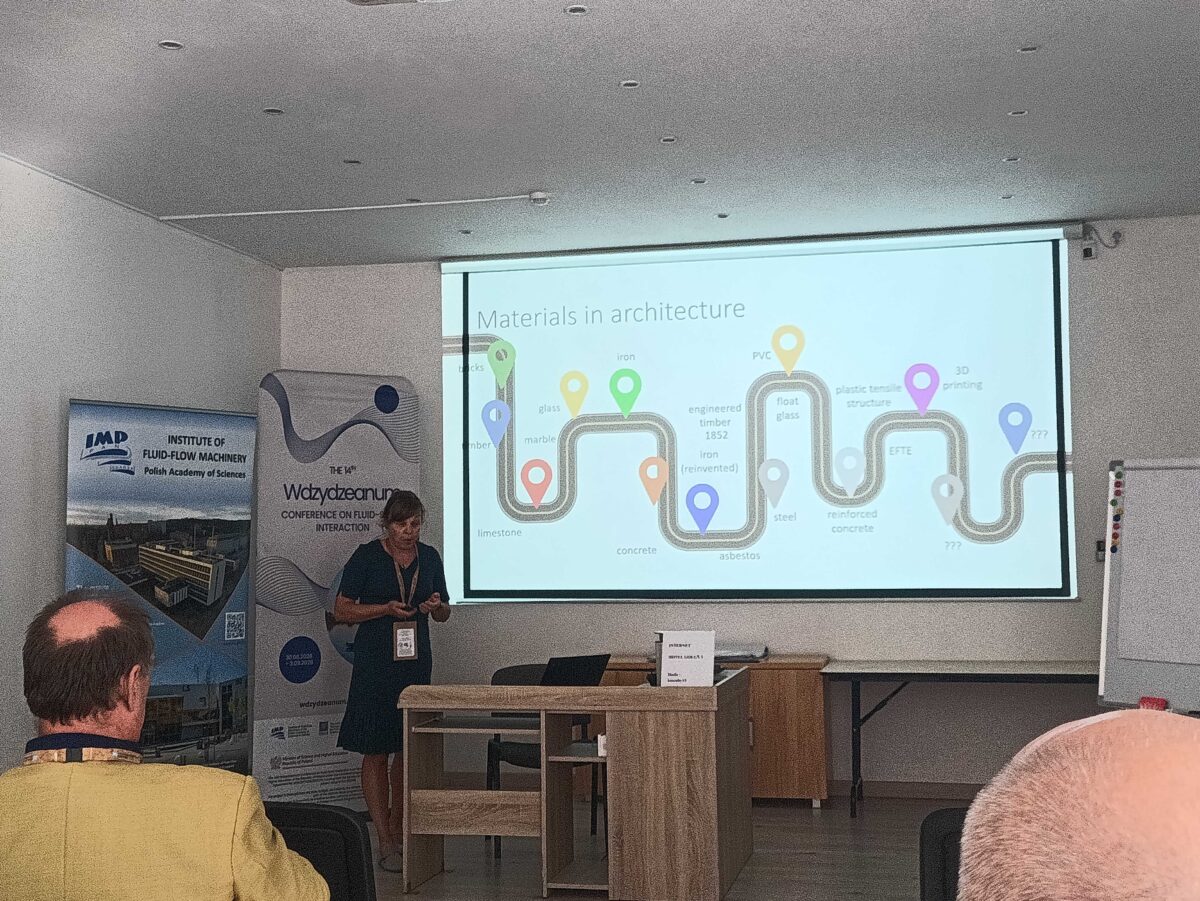
REMEDY presented at the 14th Wdzydzeanum Conference on Fluid–Solid Interaction

Dr. Anna Sandak delivered a keynote lecture titled “Living Interfaces: Fluid–Solid Interactions in Engineered Living Materials”, highlighting the emerging role of bio-based and living materials in fluid–solid interaction research.

The annual conference brought together researchers and innovators working on the modelling, testing and application of phenomena at the fluid–solid interface. Its broad scientific programme covered topics including combustion processes, renewable energy sources, flow through porous materials, catalytic combustion, filtration, fuel cells, turbine component cooling, energy storage systems and cost-effectiveness analysis.

Categories
News

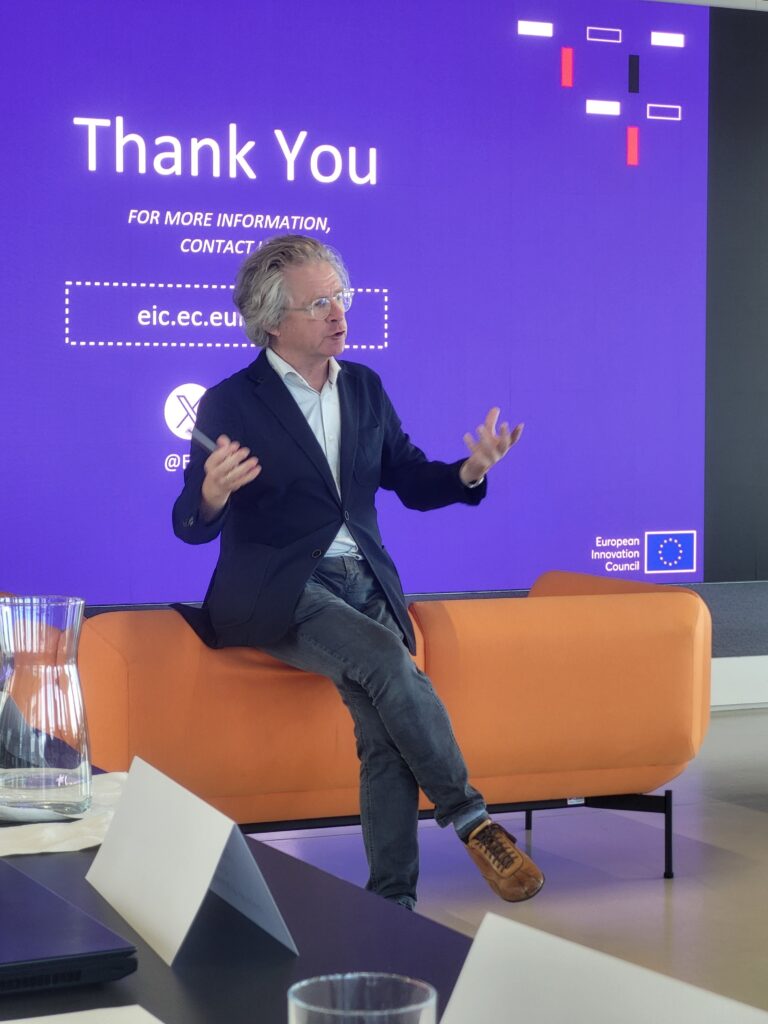
Project REMEDY presented during EIC President Michiel Scheffer Visits at TU Graz

On September 2, 2026, Michiel Scheffer, President of the European Innovation Council (EIC) Board, visited Graz University of Technology (TU Graz) to discuss European innovation policy and the future of deep-tech funding.
The high-level visit focused on how EU funding ecosystems can better scale up high-risk, high-impact technologies and bridge the gap between academic frontier research and industrial market readiness.
As part of the strategic visit, Project REMEDY was selected as one of four prominent EIC-funded projects to be showcased. Carole Planchette, who leads the REMEDY project team at TU Graz, presented the project’s core vision, milestones, and ongoing progress directly to President Scheffer and the accompanying delegation.
The successful exchange highlighted REMEDY’s alignment with the EIC’s mission to support breakthrough technologies that address complex societal and industrial challenges. We thank Michiel Scheffer, the EIC delegation, and national innovation partners for their inspiring dialogue and continued support of our research.

Categories
News

Dr. Anna Sandak discussed Engineered Living Materials and their potential to transform the future of architecture

Engineered Living Materials: How Anna Sandak Is Making Buildings Self-Heal

Categories
News

REMEDY project recognised by the European Commission’s Innovation Radar for three breakthrough innovations in regenerative architecture

The European Commission’s Innovation Radar has highlighted three pioneering innovations developed within the REMEDY project, positioning the initiative at the forefront of next-generation sustainable building technologies.

The REMEDY project (Archibiome tattoo for resistant, responsive, and resilient cities) has been recognised by the European Commission’s Innovation Radar, an initiative that identifies and promotes high-potential innovations emerging from EU-funded research and innovation projects. Innovation Radar plays an important role in showcasing Europe’s most promising research results by identifying breakthrough technologies, connecting innovators with stakeholders, and helping accelerate the transition of scientific discoveries into market-ready solutions with societal impact.

Led by the University of Primorska under the coordination of Dr Anna Sandak, the REMEDY project is developing a transformative approach to architecture by introducing the concept of probiotic architecture: buildings enhanced with engineered living materials that interact positively with their environment. REMEDY proposes the development of an archibiome tattoo – a new generation of living, high-resolution microbial inks that enable bespoke decoration and functionalisation of both new and existing building surfaces. Unlike conventional building materials, REMEDY’s engineered living systems are designed to provide active and adaptive functions, including improved environmental performance, microbial balance, carbon sequestration, oxygen production, and bioremediation.

The three innovations recognised by Innovation Radar are:
1. Engineered living material systems for bio-active and adaptive building surfaces.
2. Engineered microbial systems for air purification, CO₂ capture, and antimicrobial building applications.
3. Printable bio-coating platform for applying functional microbial layers to building surfaces.

The REMEDY consortium brings together expertise from leading academic and industrial partners. University of Primorska is the project coordinator, other partners are University of Ljubljana, Graz University of Technology, Tiger Coatings, Qres Technologies,and Xylotrade B.V.
Through this interdisciplinary collaboration, REMEDY aims to redefine the relationship between microorganisms and the built environment. By challenging the traditional perception of microbes as harmful agents, the project seeks to establish a new paradigm where microorganisms become active partners in creating healthier, more sustainable, and adaptive spaces.

“REMEDY represents a next step towards a future of regenerative architecture, where buildings are no longer passive structures, but living systems capable of interacting with and improving their surroundings,” said Dr Anna Sandak, REMEDY Project Coordinator from the University of Primorska.

The recognition by Innovation Radar highlights the scientific ambition and innovation potential of REMEDY, supporting its vision of initiating a microbial revolution in architecture and advancing Europe’s leadership in sustainable, bio-based technologies.
Categories
News

REMEDY team at the ELSA Summer School on Engineered Living Materials

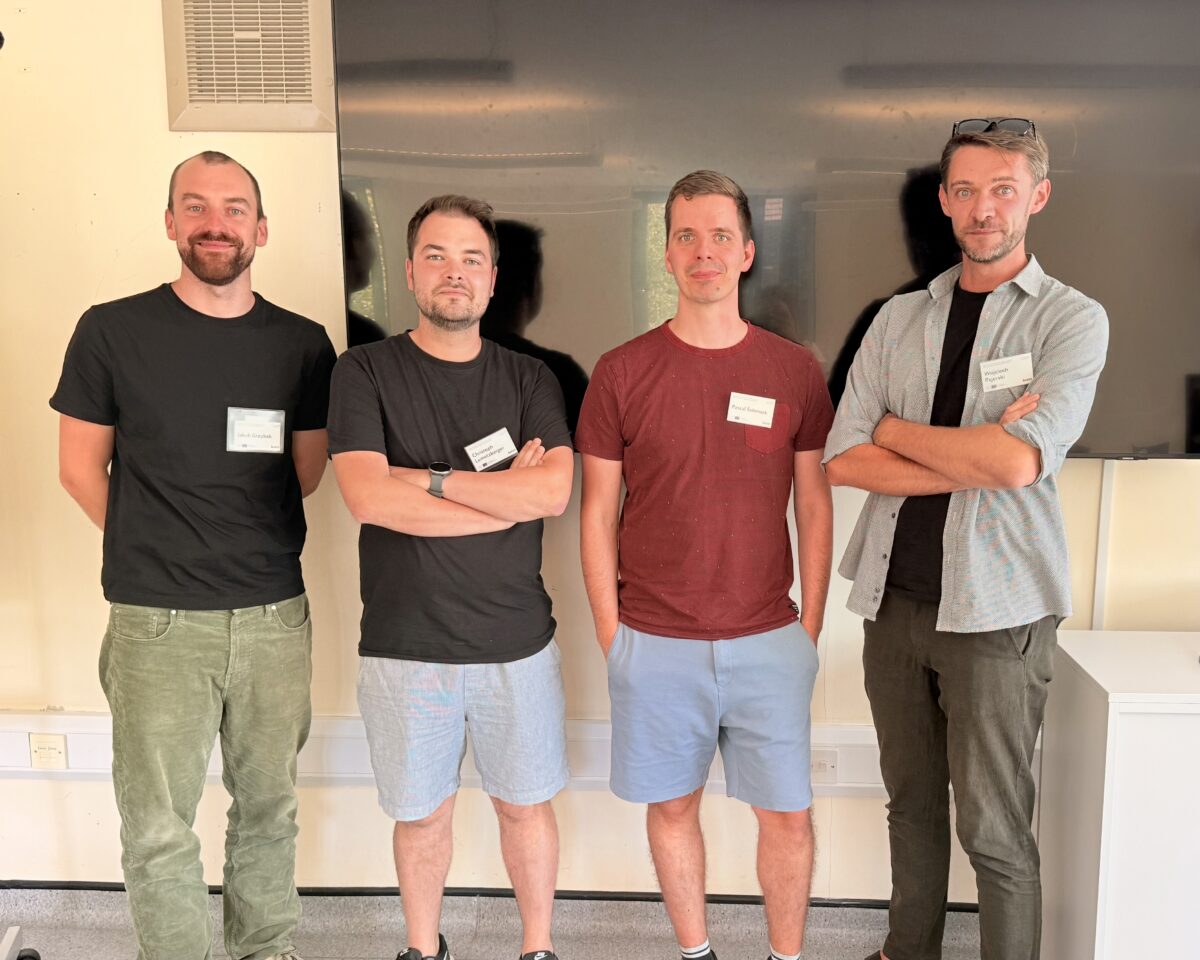
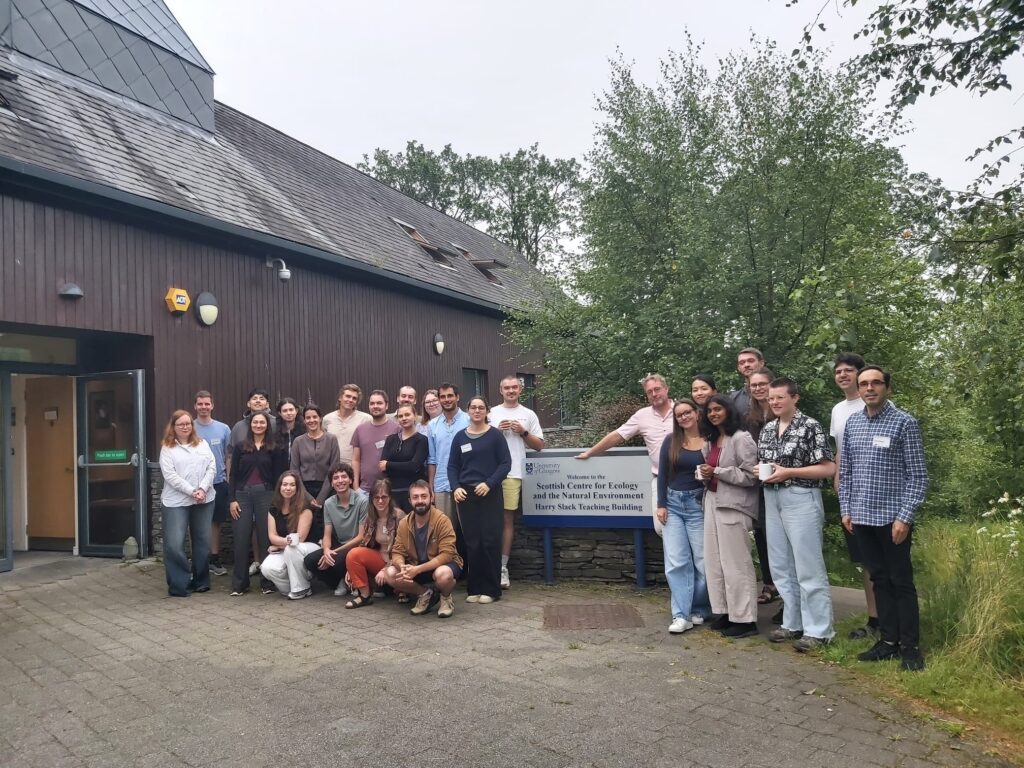
Four members of the REMEDY consortium are participating in this year’s ELSA Summer School on Engineered Living Materials in Scotland.

Dr. Jakub Grzybek and Dr. Wojciech Pajerski from the University of Primorska, together with Christoph Lumetzberger and Pascal Schmuck from Tiger Coatings, are discussing about ethical, legal and societal dimensions of Engineered Living Materials (ELMs).

The Summer school is organised within the EIC Pathfinder ELMs Portfolio, held in Glasgow and at SCENE, the University of Glasgow’s retreat on the shores of Loch Lomond. The programme brings together researchers and industry representatives to foster interdisciplinary collaboration and responsible innovation.

The event provides an opportunity to exchange knowledge, strengthen collaboration between academia and industry, and support the responsible development of Engineered Living Materials.